Ceramic Fiber Board Manufacturers: A Buyer's Guide to Grades, Properties and Uses
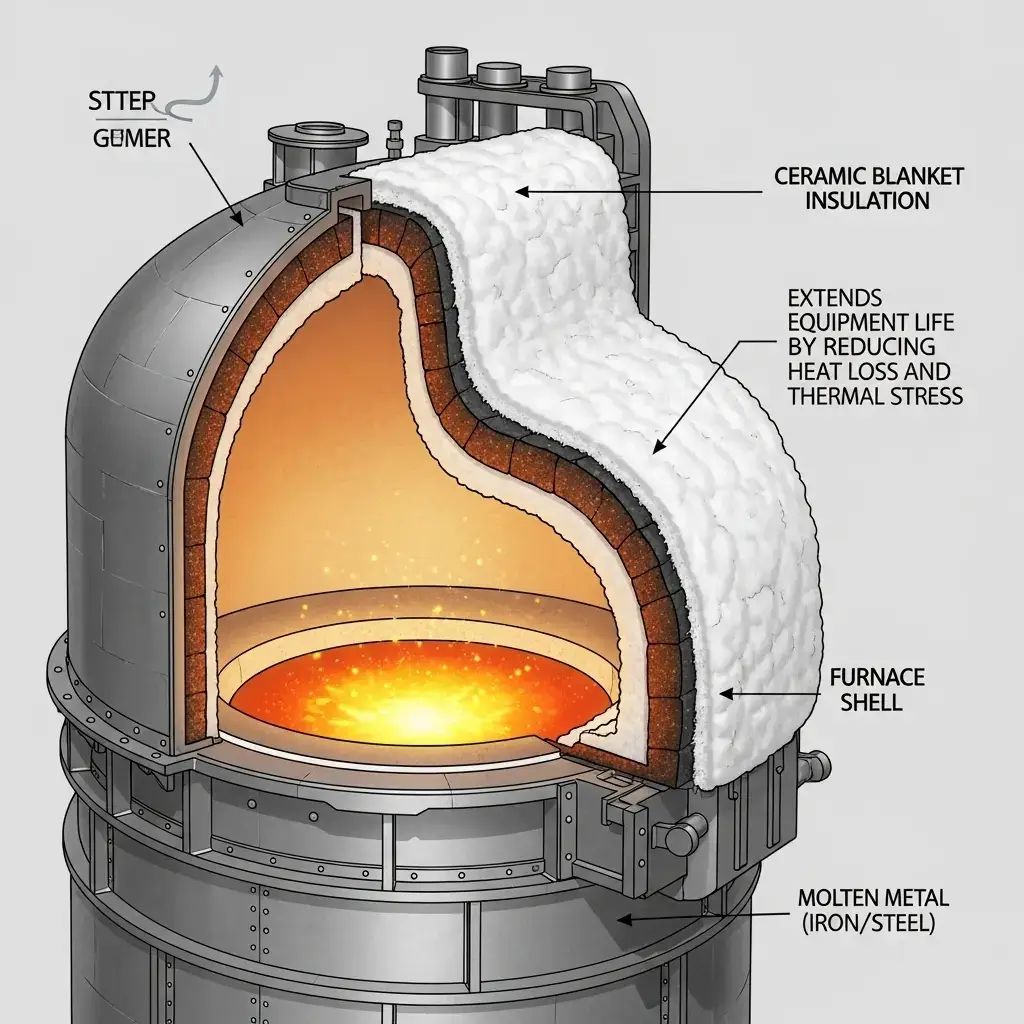
Every high-temperature process loses energy through its walls. In a furnace, kiln or boiler, poor insulation means higher fuel bills, hotter shells, uncomfortable work areas and shorter equipment life. Ceramic fiber board is one of the most effective ways to stop that heat loss, which is why it is found in industries from steel and petrochemicals to ceramics and fire protection.
This guide explains what ceramic fiber board is, the grades available, where it is used, how it compares with other insulation, and what to check when choosing ceramic fiber board manufacturers. For background on why insulation matters so much, read why industrial insulation is critical for energy efficiency.
What Is Ceramic Fiber Board?
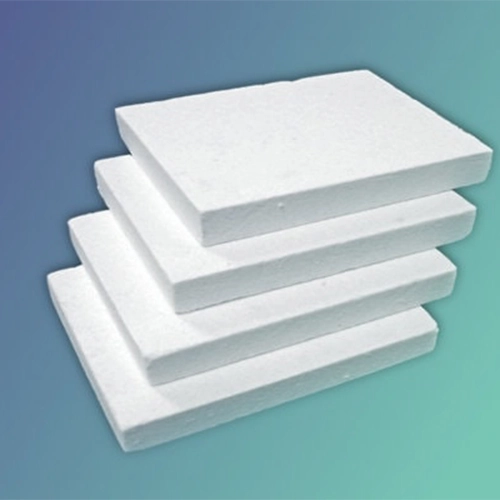
Ceramic fiber board is a rigid insulation board made from spun alumina-silica ceramic fibers mixed with binders and formed into flat sheets. Because the board is mostly trapped air between fine fibers, it is extremely light and has very low thermal conductivity, yet it withstands temperatures far above the limits of mineral wool or calcium silicate.
At Techno World Corporation, the process starts with high-purity alumina and silica fibers, followed by purification, blending, forming and quality checks. See our ceramic fiber board product page for specifications.
Key Properties
- High temperature resistance: rated from 1260°C to 1430°C (2300°F to 2600°F), depending on grade.
- Low thermal conductivity: keeps heat in the process and reduces fuel consumption.
- Lightweight: easy to transport, cut and install, and it adds little load to structures.
- Rigid and strong: holds its shape and resists mechanical wear better than flexible fiber products.
- Fire resistance: suitable for fire barriers and fire-rated assemblies.
- Machinable: can be cut into gaskets, seals, shapes and panels.
Choosing the Right Grade
| Grade | Temperature rating | Typical use |
|---|---|---|
| Standard (1260) | Up to 1260°C | Backup insulation, boilers, moderate-temperature furnaces, fire protection |
| High temperature (1430) | Up to 1430°C | Hot face or near-hot-face linings in high-temperature furnaces and kilns |
As a rule, choose a grade whose rating sits comfortably above your actual operating temperature, because fibers shrink faster when run close to their limit.
Where Ceramic Fiber Board Is Used
- Furnaces and kilns: as lining or backup insulation behind dense refractory. See choosing fire bricks for furnace applications.
- Boilers and incinerators: as a refractory backing that adds insulation and protects the primary lining. Read choosing fire bricks for boiler efficiency.
- Petrochemical plants: insulating reactors, reformers and other hot equipment.
- Gaskets and seals: cut into shapes for doors, flanges and expansion joints.
- Fire protection: fire doors, barriers, panels and fire-rated ceilings.
- Foundries: ladle covers, launders and backup insulation. Browse our foundry products.
Ceramic Fiber Board vs Other Insulation
| Product | Form | Best for |
|---|---|---|
| Ceramic fiber board | Rigid board | Flat walls, gas-velocity areas, cut parts, backup insulation |
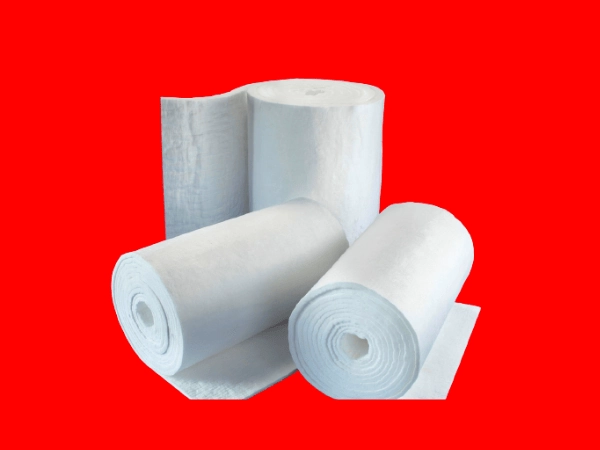
| Ceramic blanket | Flexible roll | Curves, irregular surfaces, wrapping pipes and doors |
| Ceramic fiber module | Pre-folded blocks | Fast full-fiber linings on furnace walls and roofs |
| Ceramic fiber paper | Thin sheet | Gaskets, expansion joints, thin insulation layers |
| Calcium silicate blocks | Rigid block | Lower-temperature backup insulation with good compressive strength |
| Insulation bricks | Brick | Load-bearing insulating linings |
Many linings combine several of these. For example, a dense hot face of fire brick or insulating castable may be backed by ceramic fiber board. Our guides to ceramic blanket, insulating castables and hot face insulation bricks explain these options.
Installation and Safe Handling
Ceramic fiber board can be cut with a knife or fine-tooth saw and fixed with high-temperature adhesives, anchors or ceramic anchors. Keep joints tight or staggered so heat cannot bypass the insulation.
Refractory ceramic fibers can release fine dust when cut or handled and are classified by IARC as a possible human carcinogen. Wear a suitable dust mask or respirator, gloves and long sleeves, work with good ventilation, clean up with a vacuum rather than dry sweeping, and follow the safety data sheet. Our safety equipment range can support your team.
What to Check When Choosing Ceramic Fiber Board Manufacturers
- Grade and temperature rating: confirm the classification temperature matches your process.
- Density and thickness: ask for measured values, as they affect strength and insulation.
- Shrinkage data: low linear shrinkage at operating temperature keeps joints tight.
- Consistent quality: boards should be flat, uniform and free from cracks.
- Complete insulation range: one supplier for board, blanket, modules and bricks simplifies design.
- Certifications and export capability: essential for large and international projects.
Read our tips to find high-grade insulation material manufacturers for more guidance.
Techno World Corporation: Ceramic Fiber Board Manufacturer in Gujarat
Techno World Corporation in Rajkot, Gujarat, manufactures, supplies and exports refractory and insulating materials. We hold ISO 9001:2015, ISO 14001:2015 and CE certifications and serve customers in India and abroad, including the UK, Australia, Canada, Germany and Malaysia. Explore our full refractory and insulating range.
Related Reading
- 90 K mortar refractories: properties and uses
- Boiler bed material manufacturers: types and selection
- FBC boiler bed material: specifications and performance
Get a Quote for Ceramic Fiber Board
Tell us your operating temperature, board size, thickness and quantity. Contact us, call +91 77779 78989, or download our brochure.
Popular Posts