How to Choose the Right Refractory Fire Bricks for Your Application
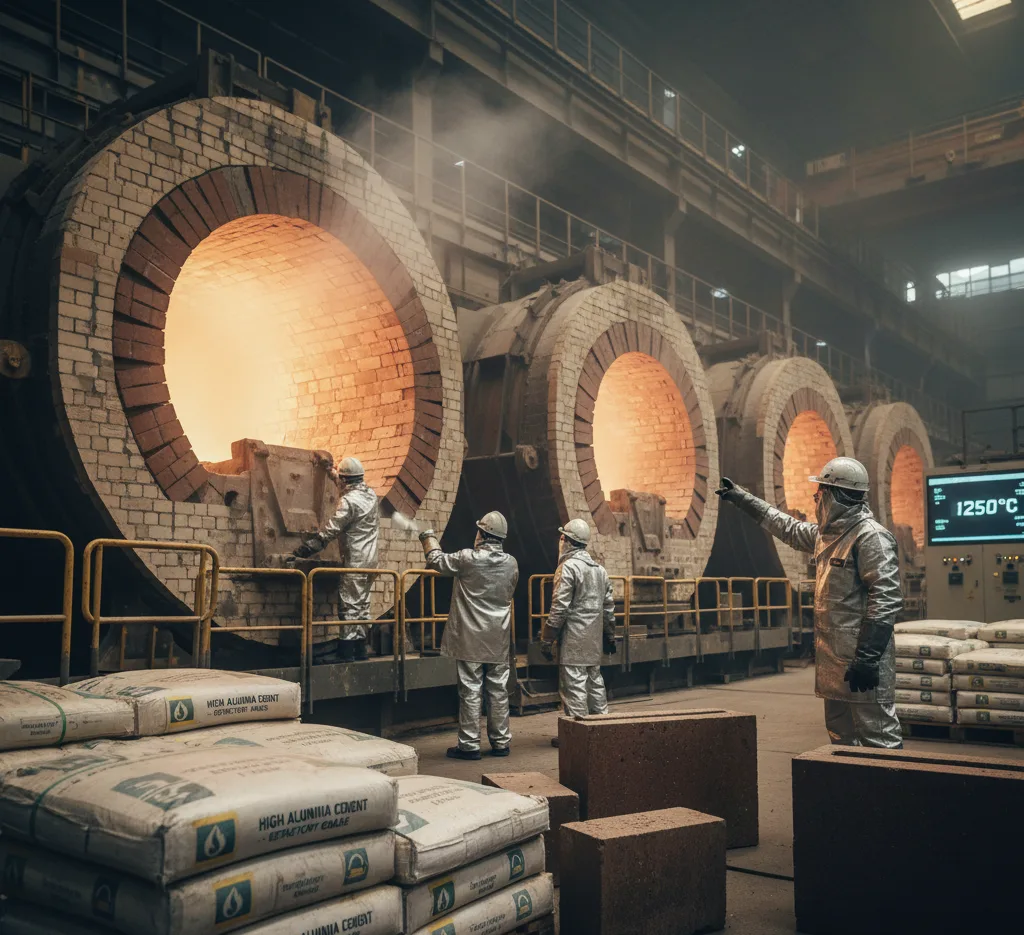
It may look like an easy process to select refractory fire bricks from any manufacturer, popular in your region. But, things start to get complicated once the bricks are installed for high-temperature industrial operations. On paper, most fire brick manufacturers claim that their bricks offer high performance even in constant high-heat conditions. But, in reality, not all of them deliver what they claim.
At this point, many buyers ask the same question: how to find the right refractory fire bricks specifically for high-heat operations?
Well, the right choice depends less on catalog numbers and more on how your process actually runs day after day. Understanding a few key factors can save you from frequent relining, heat loss, and unexpected shutdowns, which we will explore in this post.
Key Factors to Pick High-Grade Refractory Fire Bricks
1. Start With the Actual Operating Temperature
Often maximum temperature ratings of fire bricks can be misleading. So, you need to check the temperature your furnace or kiln runs at for most of the time.
If the equipment operates close to its upper limit continuously, the brick must be comfortable at that range, rather than just capable of surviving for a short period. Additionally, consider heating and cooling cycles. Repeated expansion and contraction put stress on fire bricks, and some grades handle thermal cycling better than others.
When you have the highest temperature requirement defined, you can look for fire bricks with similar temperature withstanding capacity.
2. Understand Where the Brick Will Be Used
The selection of fire bricks also depends on the operational conditions. Some bricks may be directly in contact with flames and some may be used as a backup lining or structural support. In some industrial zones, the bricks may experience hot gases or chemical vapors. Therefore, it is non-negotiable that one chooses the right fire bricks with the right specifications, aligning with use cases.
Finding whether the brick is suitable for hot-face lining, insulation support, or load-bearing areas helps narrow down the right type quickly.
3. Match Brick Chemistry With the Process
Fire bricks are not just in contact with high-heat conditions. These refractory components are exposed to slag, ash, fumes, and chemicals. All of these impact refractory lining life. Acidic, basic, and neutral environments require compatible refractory chemistry.
If you end up with the wrong composition, it may lead to erosion, cracking, or rapid wear. Understanding what comes in contact with the brick during operation is critical before finalizing the grade.
4. Look Beyond Strength and Density
You should not choose fire bricks just because they have high compressive strength. There are other things to keep in mind. Very dense refractory bricks for fire pit may absorb more heat, which can add numbers to fuel consumption costs. Light-weight bricks reduce heat loss but may fail to withstand heavy mechanical loads.
Therefore, you should choose the right type of fire bricks, having a balance between strength, density, and insulation value. This balanced approach reflects the brick’s role within the lining system, not just its test results.
5. Consider Installation and Maintenance Conditions
Some refractory fire bricks can be cut and installed more conveniently than others. For complicated furnace designs, curved surfaces, or tight spaces, fire bricks need to be managed without excessive breakage to ensure an efficient installation process.
Maintenance access is also as crucial as installation. If shutdowns are expensive or infrequent, choosing a more durable type of bricks upfront can help ensure long-term operational consistency without disruption.
6. Check Batch Consistency, Not Just Samples
Avoid trusting blindly just by checking a single sample brick. For large fire brick linings, you should check if the manufacturer maintains consistency across batches. Variations in size, firing quality, or density can result in uneven joints and weak spots.
When you are able to find the manufacturer with controlled production processes, you can enjoy the benefits of more predictable results once installation begins.
7. Factor in Heat Loss and Energy Efficiency
Once installed, the refractory fire bricks can influence fuel usage more than industrial buyers often realize. Improper brick selection can be a key reason for heat leakage, making burners work harder to maintain temperature.
Combining the right fire brick with proper insulating layers helps stabilize temperature and control long-term energy costs.
Where to Buy Refractory Fire Bricks?
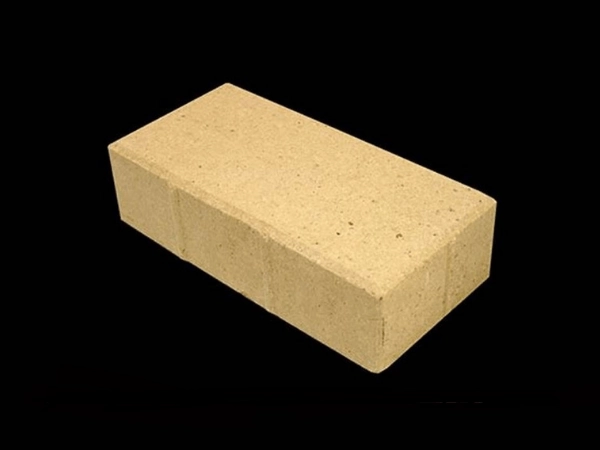
Refractory fire bricks are best sourced directly from established manufacturers or authorized industrial suppliers rather than general traders in your region who just claim to deliver the best bricks but fail to live up to expectations. When you purchase fire bricks straight from a nation-wide, reliable manufacturer, it guarantees consistent quality, correct brick chemistry, and proper technical guidance based on your application. This matters because a brick that works well in one furnace can fail quickly in another if the grade isn’t matched correctly.
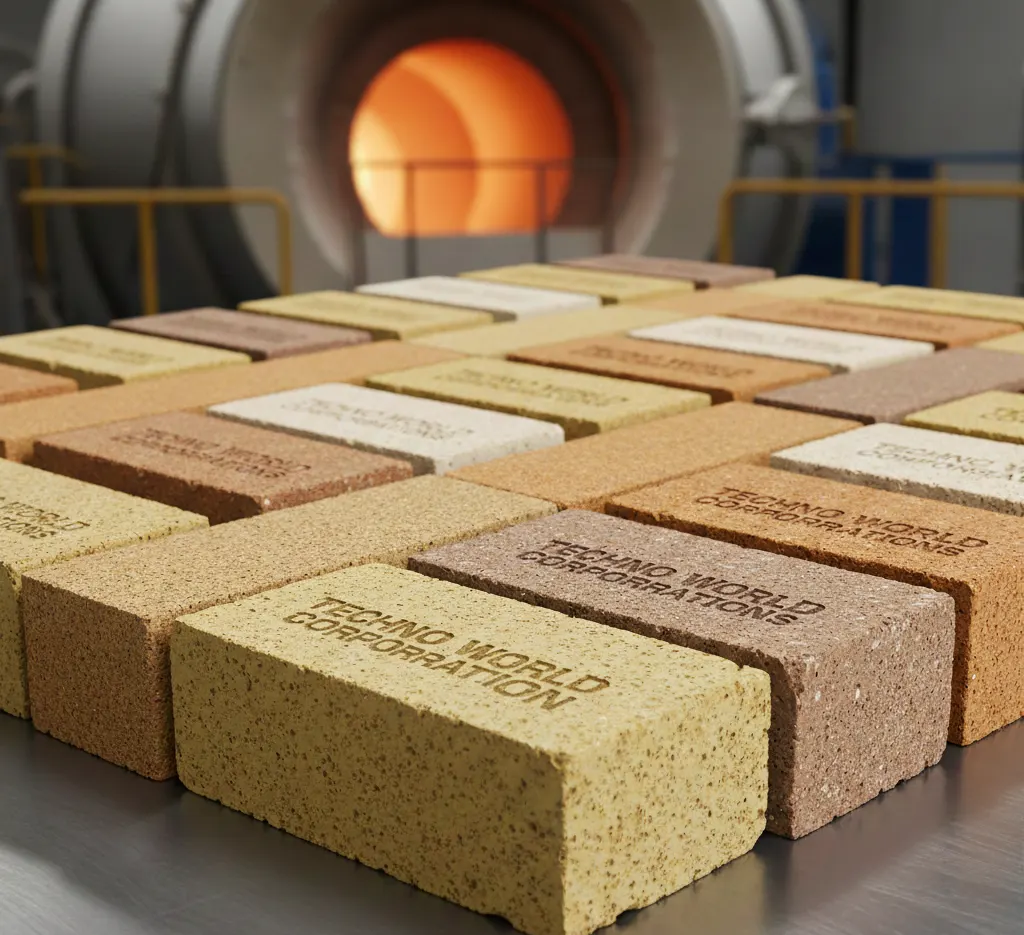
Techno World Corporation has maintained its reputation in the Indian refractory market with a wide range of high-quality refractory solutions. We live up to industrial buyers’ expectations by offering refractory fire bricks with controlled chemical composition, reliable physical properties, and consistent batch-to-batch quality, backed by practical application support.
Talk with our customer support team if you have any inquiry or you have made up your decision and need quotes.
Popular Posts