Understanding Refractory Materials and Their Role in Industrial Operations
It is easy to overlook refractory materials because they're built into the equipment, not the finished product. Yet every time a furnace reaches operating temperature, a kiln completes another cycle, or molten metal moves through a production line, those materials are doing work that few people ever notice.
The condition of a refractory lining often goes unnoticed when production is running as planned. It usually becomes a priority during a shutdown, an unexpected repair, or when equipment no longer performs as expected. By then, the discussion is no longer just about replacing a material. It shifts to production loss, maintenance schedules, energy performance, and the operating life of critical equipment. That is why understanding refractory materials is as much an operational decision as it is an engineering one.
Why Refractory Materials Matter in Industrial Operations
In industrial operations, heat is expected. Unplanned shutdowns are not.
Most high-temperature equipment is designed to operate under demanding conditions every day. What determines how long that equipment continues performing is often the condition of the lining protecting it. Once that protection begins to deteriorate, maintenance schedules tighten, fuel efficiency can decline, and production interruptions become harder to avoid.
That is why Refractory products are treated as an operational asset rather than a consumable in many industries. Well-selected industrial refractory materials help plants maintain stable operating conditions between maintenance shutdowns, allowing equipment to perform consistently throughout its expected service life.
What Sets Industrial Refractory Materials Apart
Temperature tells only part of the story. Two furnaces can operate at similar temperatures and still place completely different demands on their refractory lining. One may expose the material to molten metal, another to an abrasive clinker, while a third cycles between heating and cooling several times a day. Those operating conditions influence refractory performance just as much as heat itself.
That is why industrial refractory solutions are never chosen based on temperature ratings alone. Engineers also consider thermal cycling, mechanical wear, chemical exposure, and the way a process operates over weeks or months of continuous production. The right material is the one that matches those conditions, not simply the one that withstands the highest temperature.
The Main Types of High-Temperature Refractory Materials
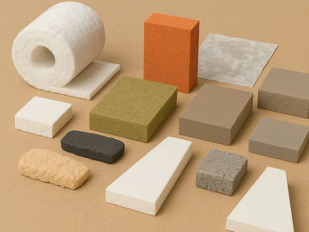
No single refractory material suits every furnace, kiln, or thermal process. The right choice depends on operating conditions, equipment design, and maintenance requirements. That is why high-temperature refractory materials are available in several forms, each developed to solve a different operational challenge.
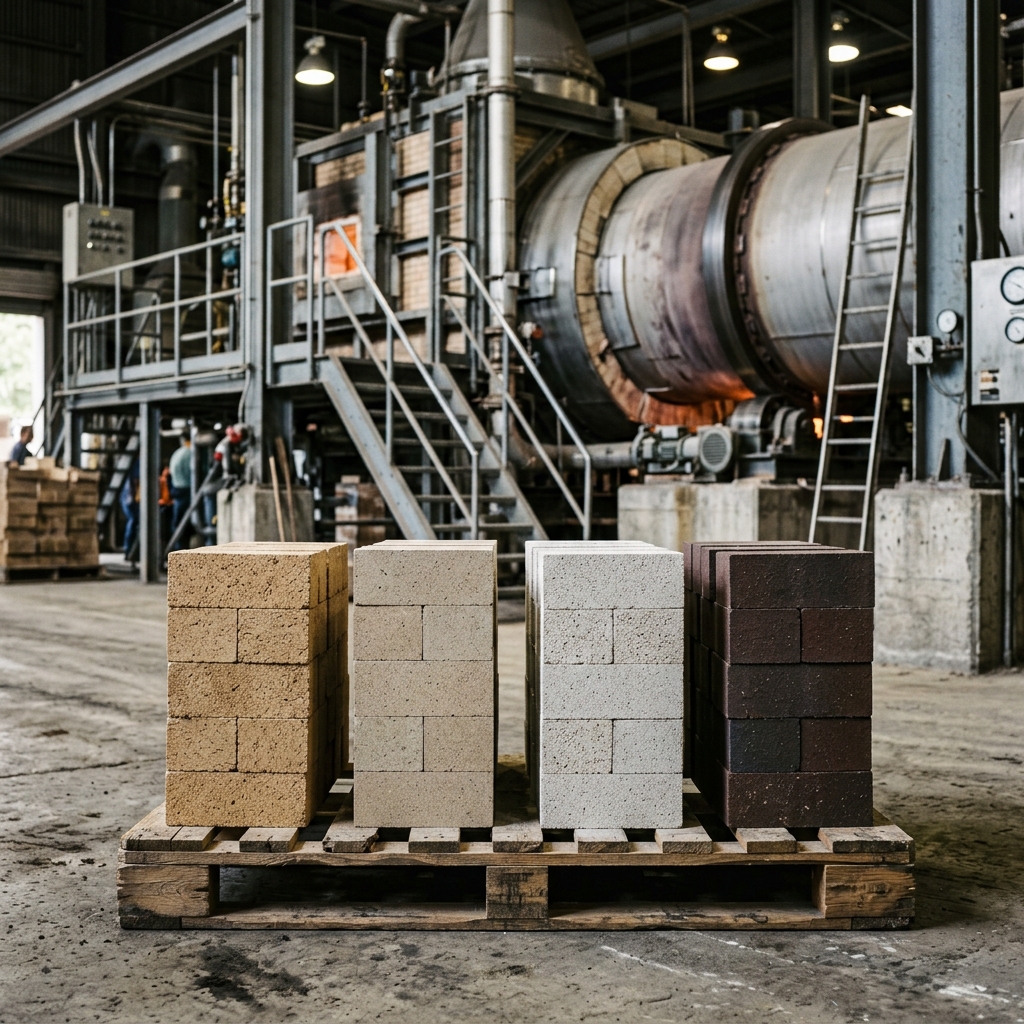
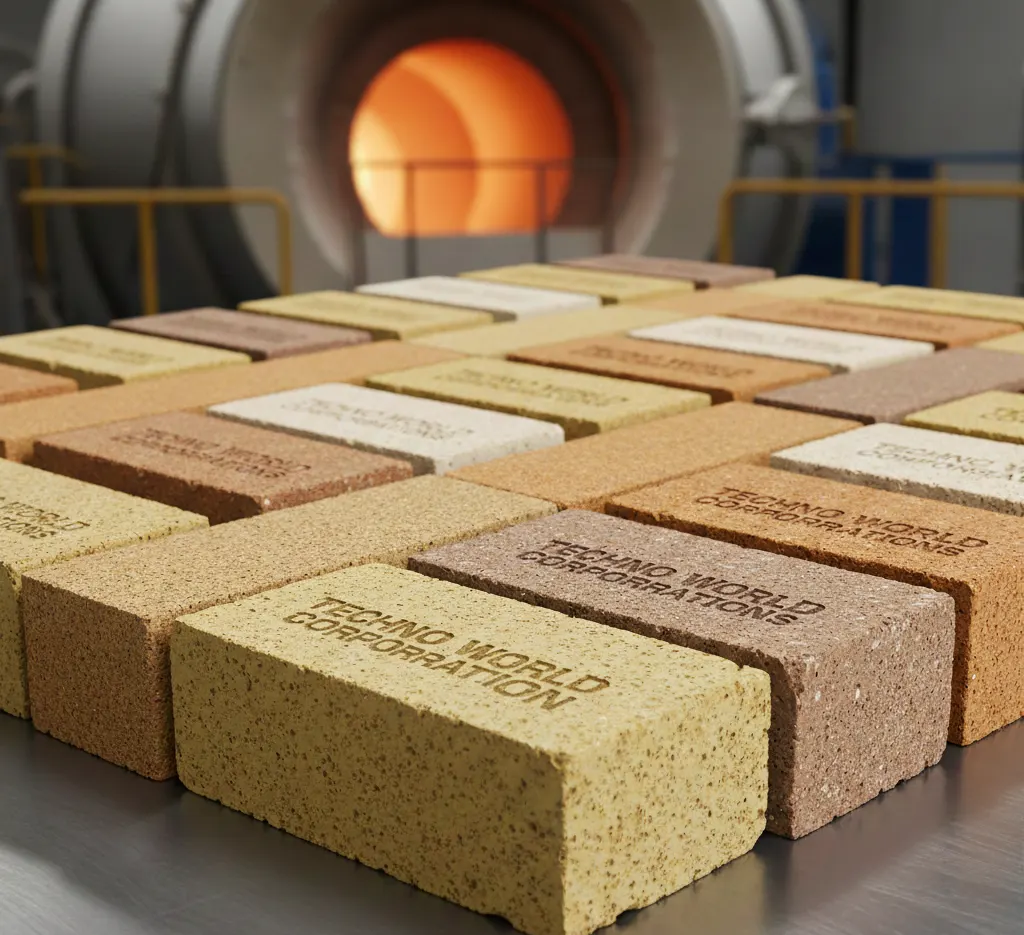
Shaped Refractories (Refractory Bricks)
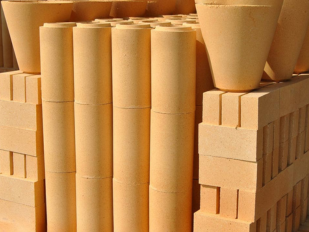
Where strength and dimensional stability are priorities, refractory bricks remain a preferred choice. They are commonly installed in furnaces, kilns, and similar equipment where a precisely built lining is expected to withstand continuous service over long operating campaigns.
Unshaped Monolithic Refractories
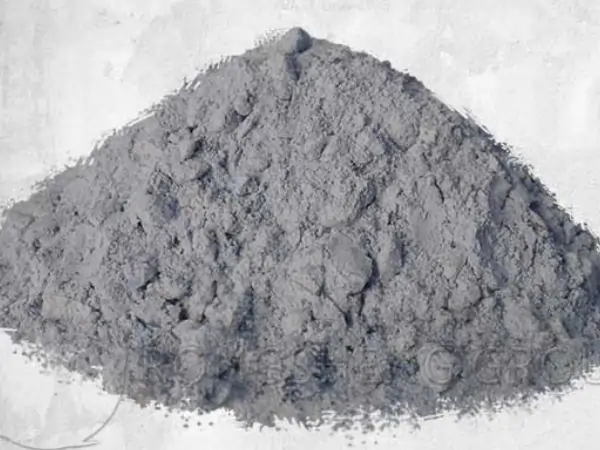
Not every installation suits brickwork. Areas with irregular shapes, repair zones, or complex equipment layouts are often lined with monolithic refractories, allowing the material to be applied directly where it is needed without relying on pre-shaped units.
Industrial Insulation Materials
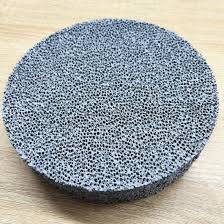
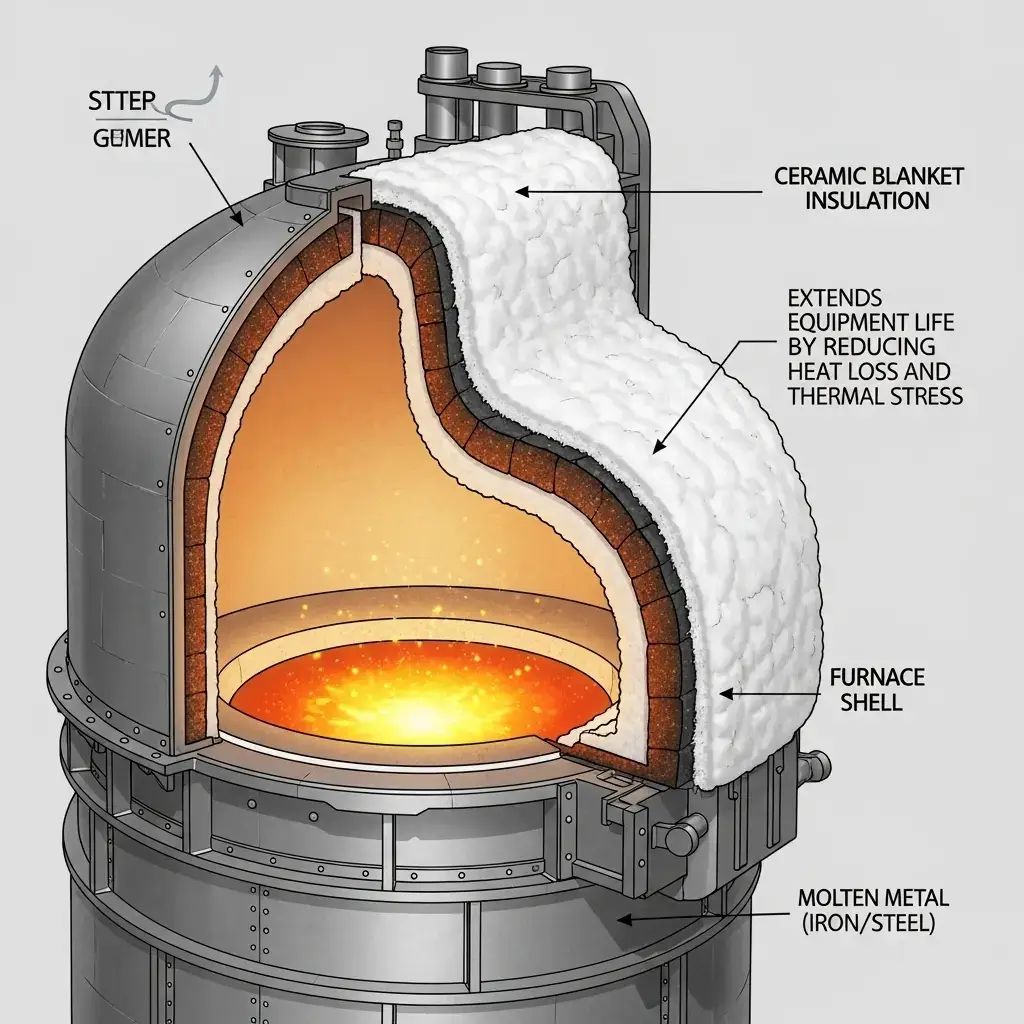
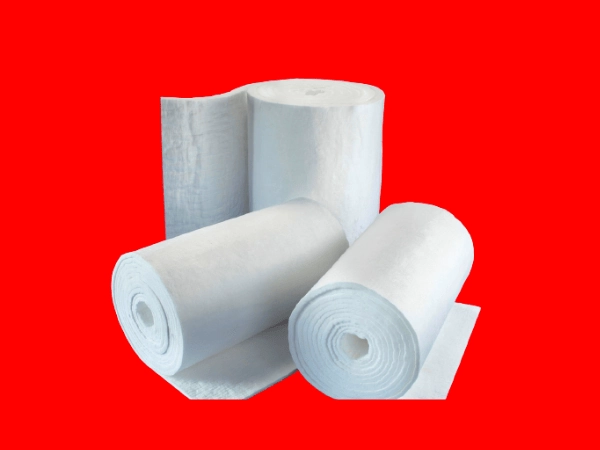
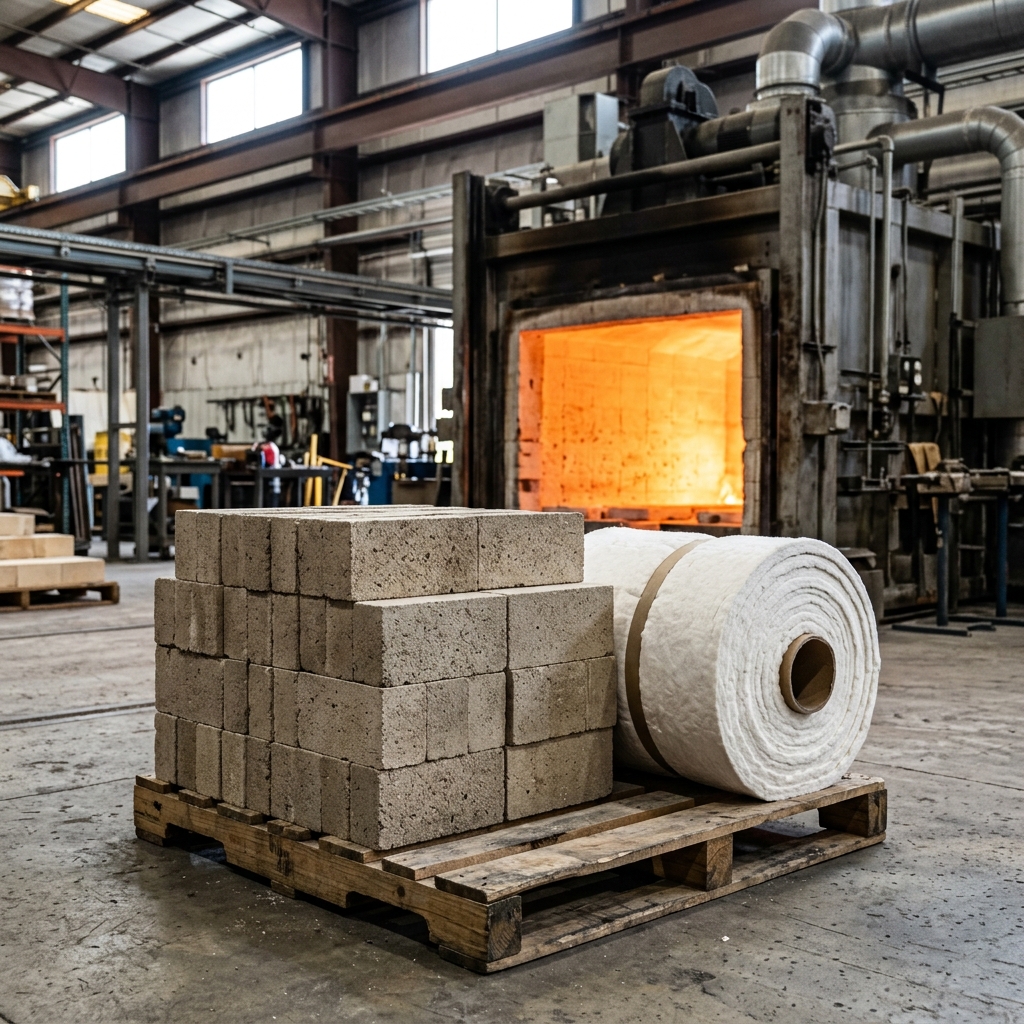
Dense linings retain the process. Industrial insulation materials help retain the heat. Installed behind the working lining or around thermal equipment, they reduce heat loss, improve energy efficiency, and help maintain more stable operating temperatures.
How Refractory Products Support Different Industrial Processes
No two thermal processes operate exactly alike, even when furnaces, kilns, or vessels appear similar from the outside. That is exactly why refractory products are selected around the process itself, not simply around a temperature figure printed on a specification sheet.
Different industries place different demands on their refractory lining:
- Steel Plants: A lining has to cope with molten metal, aggressive slag, and repeated heating and cooling. Campaign life often depends on how well it performs through those changing conditions rather than how it performs on the first day.
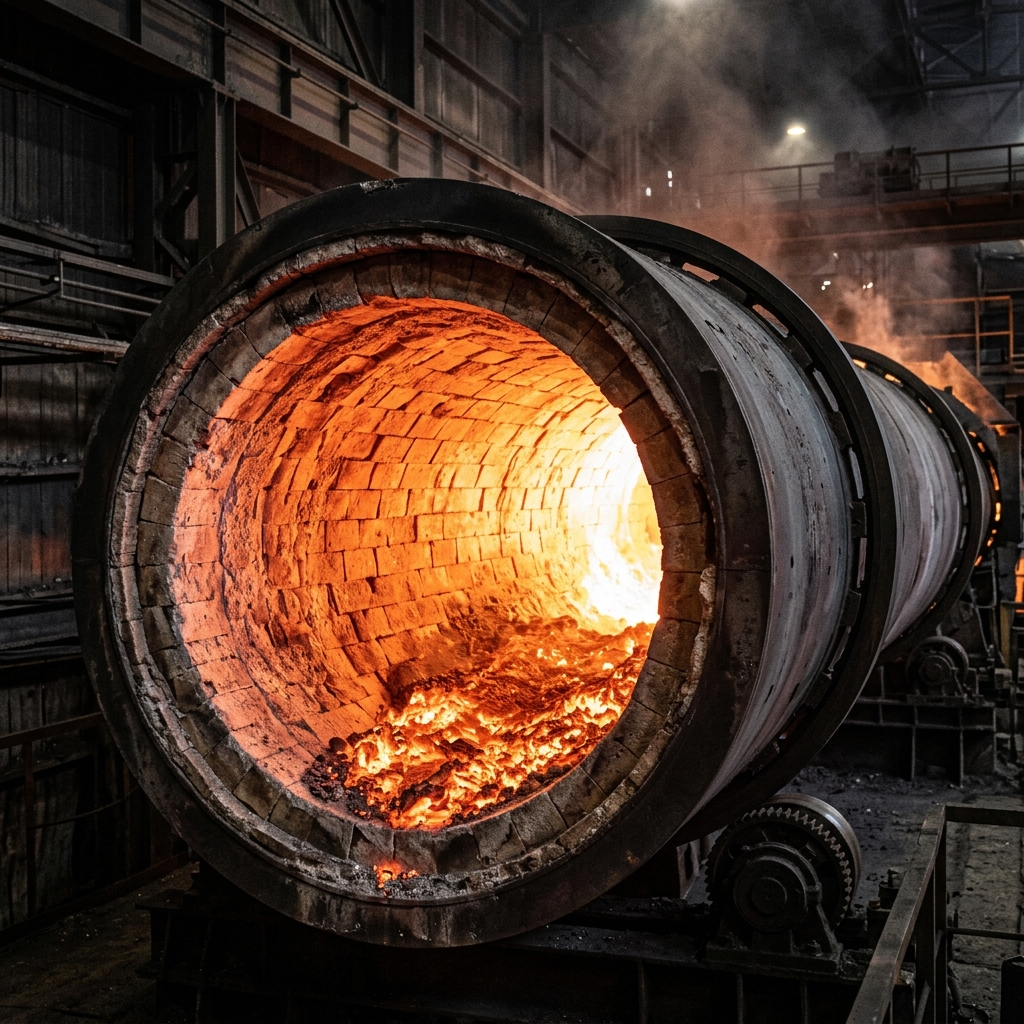
- Cement Plants: Rotary kilns rarely give refractories an easy job. Continuous firing, moving clinker, and chemical exposure gradually wear the lining, making durability just as valuable as heat resistance.
- Foundries: Production rarely follows one long uninterrupted cycle. Melting, tapping, holding, and reheating create repeated temperature changes, so the refractory has to recover from one cycle before the next begins.
- Glass, Ceramics, and Power Plants: Here the priority often shifts towards maintaining stable operating conditions over extended production runs while limiting unnecessary heat loss from the system.
The operating environment changes from one industry to another. The principle doesn't. The closer the refractory matches the process, the longer equipment can continue running before maintenance becomes unavoidable.
Choosing the Right Refractory Manufacturer
One refractory lining may last through an entire production campaign, while another requires attention much sooner. The difference often begins long before installation—with how well the application is understood.
A capable refractory manufacturer doesn't begin by recommending a product. The first discussion is usually about the process, including operating temperatures, heating cycles, chemical exposure, equipment design, previous lining performance, and the conditions that caused earlier failures.
That conversation often reveals details that a specification sheet cannot.
When comparing refractory suppliers, buyers generally look for more than product availability:
- A willingness to understand the application before suggesting a material
- Consistent manufacturing quality across repeat orders
- Practical technical support during installation and maintenance
- Reliable supply for planned shutdown schedules
- Experience working with similar industrial processes
Most plants remember a refractory supplier for one reason above all others: how the lining performs once production is back underway.
Securing Reliable High-Temperature Operations
Every shutdown leaves behind a lesson. Sometimes it's about maintenance. Sometimes it's about process conditions. Quite often, it comes back to the refractory lining itself.
That's why Techno World Corporation approaches every project by understanding how the equipment operates before recommending a refractory system because reliable production starts with informed engineering decisions, not assumptions.
Popular Posts