How to Choose the Right Refractory Material for High-Temp Applications
Choose the right refractory material before the furnace starts, not after the lining begins to fail. By the time cracks, excessive wear, or heat loss become visible, replacing the material is often far more expensive than selecting the right one in the first place.
No single refractory performs well in every application. The conditions inside a reheating furnace, rotary kiln, ladle, or incinerator are rarely the same, even when operating temperatures appear similar. That is why refractory selection begins with understanding the process rather than comparing product grades.
The closer the material matches the application, the more predictable its performance becomes throughout the production cycle.
Now, we'll dive straight deep into how to choose the right refractory material for high-temp applications.
Why Refractory Material Selection Cannot Be an Assumption
Few plants replace a refractory lining because it has reached the end of its expected service life. More often, the decision follows uneven wear, unexpected damage, or changing process conditions that the original lining was never intended to handle.
That is why refractory material selection is treated as an engineering exercise rather than a product comparison. Temperature, process chemistry, operating cycles, equipment design, and maintenance expectations all influence how a lining performs once production begins. Looking at only one parameter can create problems that are difficult to correct later. A structured evaluation helps match the material to the process, reducing uncertainty before the first brick is laid or the first castable is installed.
5 Key Factors That Determine the Right Refractory Material
1. Operating Temperature Ranges
The highest recorded temperature tells only part of the story. High-temperature refractory materials should also be evaluated against continuous operating temperatures, local hot spots, and how long the equipment remains under heat during each production cycle.
2. Chemical Environment and Corrosive Exposure
A refractory that performs reliably in one furnace may deteriorate quickly in another if the chemical environment changes. Slag composition, alkali attack, process gases, and molten materials all influence long-term lining performance.
3. Thermal Shock and Rapid Fluctuations
Some processes heat up and cool down repeatedly, placing continuous stress on the lining. Where frequent temperature changes are expected, resistance to thermal shock often becomes as important as heat resistance itself.
4. Mechanical Stress and Structural Wear
Material movement, abrasion, impact, and equipment loading gradually wear the working lining. Selecting a refractory that matches these conditions helps reduce premature damage during normal plant operation.
5. Thermal Conductivity and Energy Retention
Not every application benefits from the same heat transfer characteristics. Some processes only work efficiently when there's rapid heat movement, while others rely heavily on retaining heat within the furnace to improve thermal efficiency and process stability.
Matching Refractory Materials to the Equipment
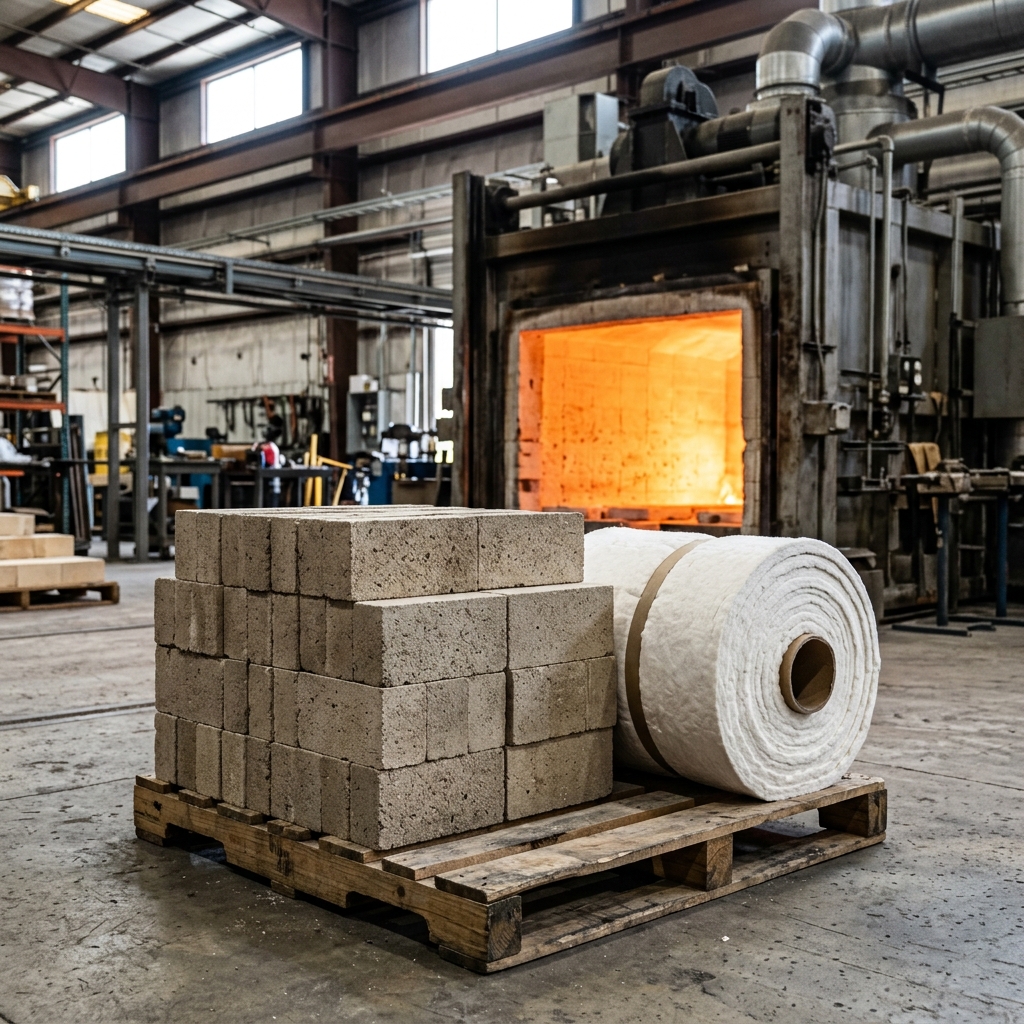
One question comes up on almost every lining project: should the equipment be lined with bricks or a monolithic refractory? There isn't a standard answer because the equipment itself usually decides.
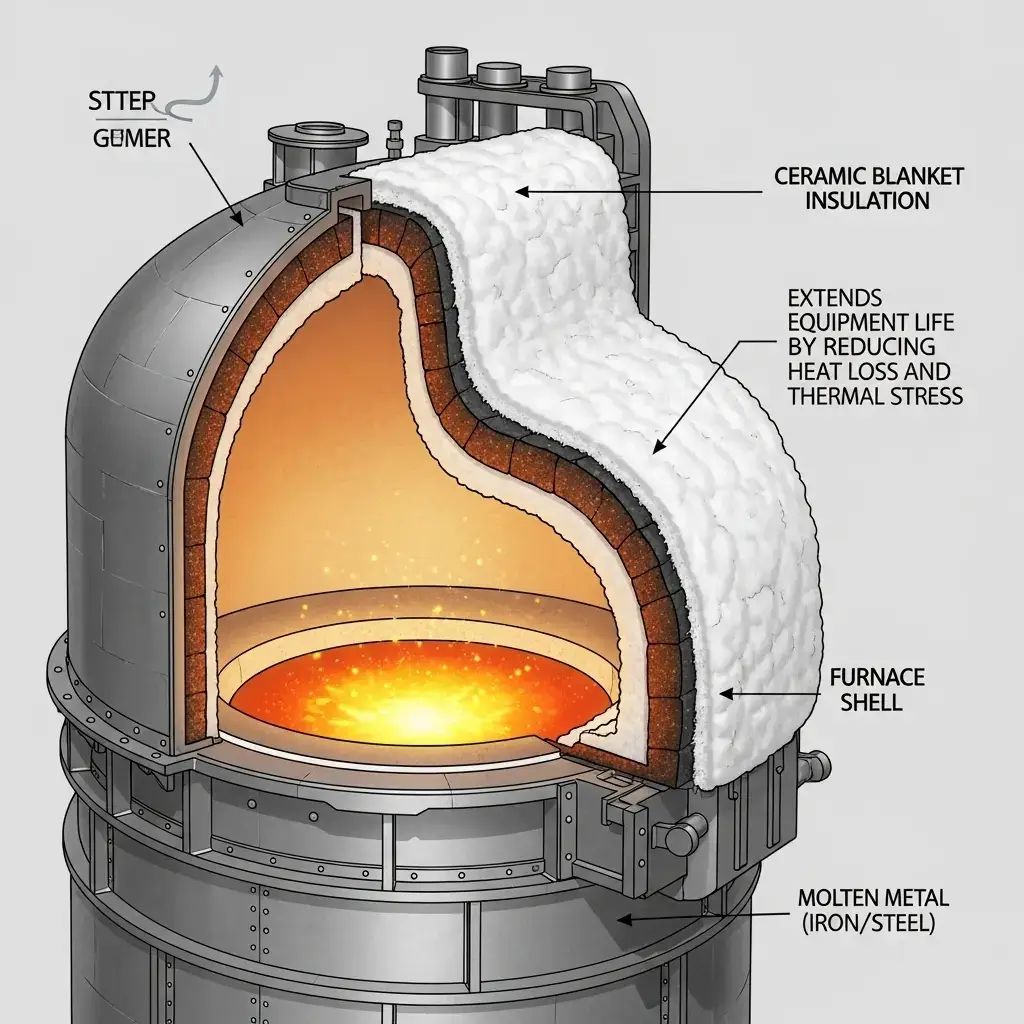
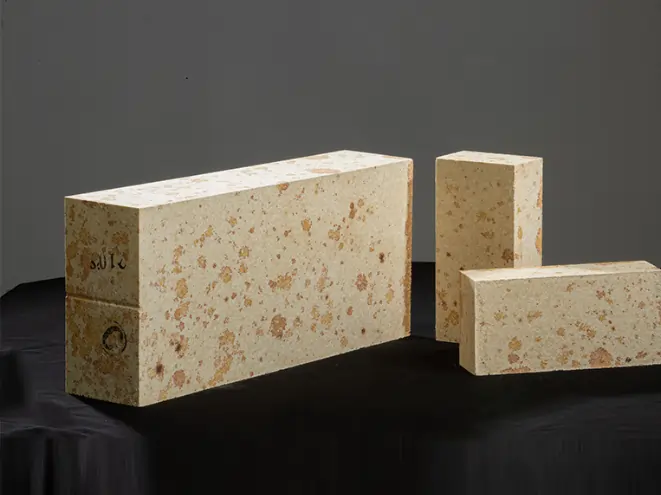
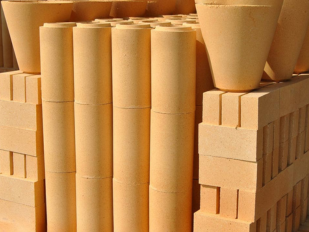
Large, straight-lined furnaces and kiln sections often benefit from shaped refractory materials, particularly where individual sections may need to be repaired or replaced over time. Castables and other monolithic systems become a practical option when the lining has curved surfaces, complex shapes, or areas where laying bricks would be difficult.
Many industrial installations combine both. The final choice depends less on the product category and more on how the equipment operates, how maintenance is carried out, and what the lining is expected to withstand throughout its service life.
Validating Your Material Choice Before Installation
A right choice of refractory products often looks convincing on paper. The real question is whether it reflects the conditions inside the equipment, not just the figures in a product catalogue.
Before confirming the specification, experienced engineers compare the proposed material with previous lining performance, operating temperatures, maintenance records, and the actual environment inside the furnace. Small details such as repeated thermal cycling, abrasive charge materials, or process chemistry can influence the final decision more than a higher service temperature listed on a datasheet.
Where the application is unfamiliar or unusually demanding, discussing the project with an experienced refractory manufacturer can help confirm that the selected material is suited to the process before installation begins.
What the Next Shutdown Can Tell You
A shutdown often answers one question that operating temperatures alone cannot: Was the right refractory selected in the first place? The condition of the lining usually tells its own story long before a report is written.
During inspection, engineers rarely focus on a single damaged brick. They look for patterns that explain how the lining has behaved throughout the campaign.
- Has one section worn noticeably faster than the rest?
- Has the operating process changed since the lining was installed?
- Would different furnace refractory materials perform better in the highest-wear areas?
- Has the campaign life matched the original maintenance plan?
- Would revised industrial refractory solutions better suit current production demands?
Those discussions often shape the next refractory specification more than the original product catalogue ever did.
The Right Choice Is Usually Made Before the Furnace Starts
Most refractory decisions are made during planning, but they're judged months later when the next shutdown arrives. If the lining has performed as expected, the selection was probably the right one. If not, the review usually starts with the original specification rather than the installation itself.
That's why it pays to evaluate every application carefully before a material is ordered. At Techno World Corporation, we work with customers to understand operating conditions first, helping them select refractory solutions that are built around the process.
Popular Posts