
Silica Tundish Boards: How They Work in Continuous Casting and How to Choose a Manufacturer
Published by Techno World Corporation on 6 October 2026
In continuous casting, the tundish sits between the ladle and the moulds. It holds a reservoir of molten steel, evens out the flow and feeds one or more casting strands. Its lining must keep steel hot, resist erosion and be easy to strip after each sequence. Disposable tundish boards do much of this work.
This guide explains how tundish boards are used, when silica boards are the right choice and what to check with silica tundish board manufacturers.
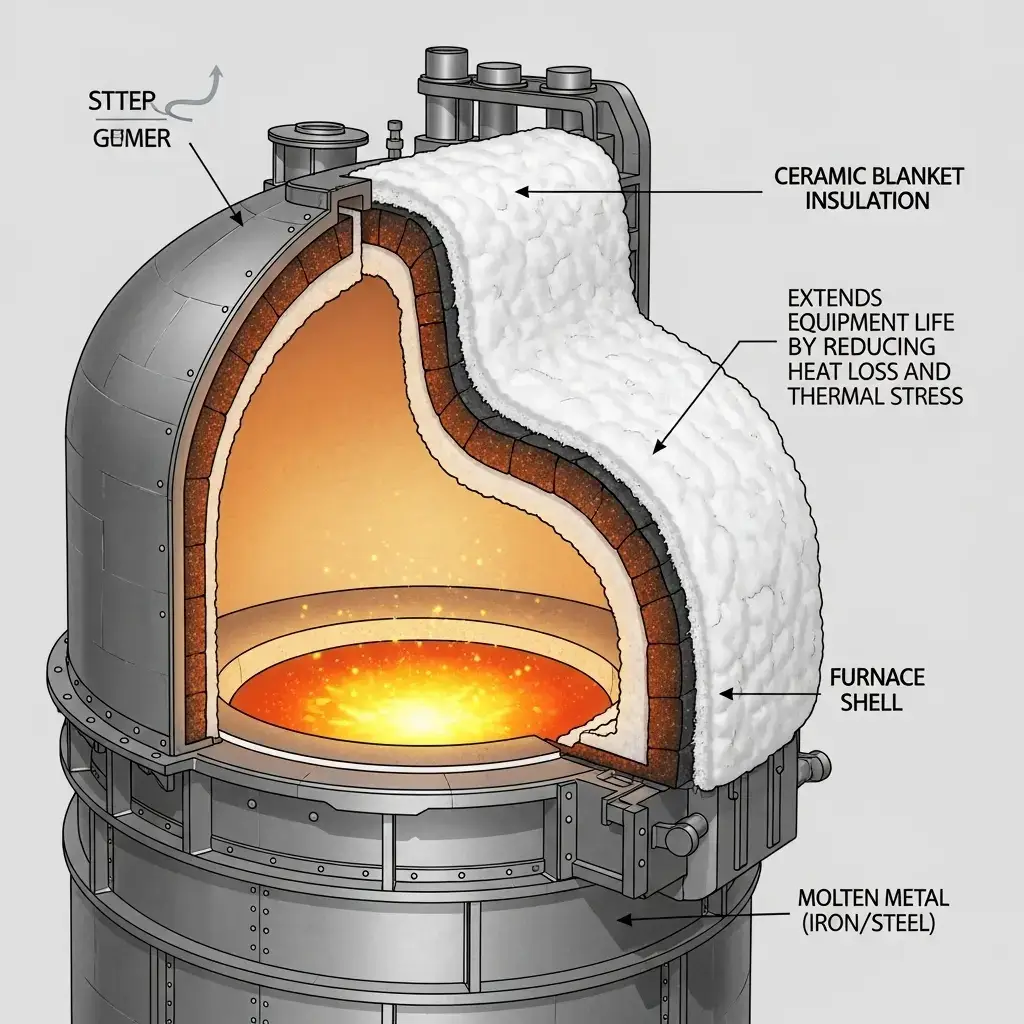
How a Tundish Lining Is Built
- Steel shell: the tundish body.
- Permanent lining: usually a castable or bricks, lasting many sequences. See dense castables.
- Working lining: disposable boards placed against the permanent lining, or a sprayed or gunned layer in some plants.
- Flow control parts: tundish nozzles, nozzle blocks and dams or weirs.
What Tundish Boards Do
- Insulate: reduce heat loss so steel stays at casting temperature.
- Protect: shield the permanent lining from erosion and steel contact.
- Speed turnaround: boards and skull can be removed easily after casting, so the tundish is ready again quickly.
- Reduce preheating needs: insulating boards can lower or simplify preheating requirements in many operations.
Silica vs Magnesia Tundish Boards
| Silica boards | Magnesia (basic) boards | |
|---|---|---|
| Chemistry | Silica-based | Magnesia-based |
| Typical use | General carbon steel grades and foundry or non-ferrous casting | Clean steels and aluminium-killed grades |
| Cost | Economical | Higher |
| Consideration | Silica can react with aluminium in aluminium-killed steels and add inclusions | Better compatibility with basic slags and clean-steel practice |
Match the board to your steel grade and slag practice. Many plants use silica boards for general grades and switch to basic boards for clean or aluminium-killed steels.
Properties to Check
- Thermal insulation: keeps steel temperature stable through the cast.
- Erosion and slag resistance: especially at the steel and slag line.
- Low thermal expansion: helps boards stay tight against each other.
- Handling strength: boards must survive transport and installation without breaking.
- Low moisture: moisture can cause steam, hydrogen pickup or cracking.
- Dimensional accuracy: close-fitting boards reduce the risk of steel penetrating joints.
Installation Tips
- Store boards in a dry, covered area and use them within the recommended period.
- Clean the permanent lining before fitting new boards.
- Fit boards tightly and seal joints with a suitable mortar or ramming material.
- Fill any gaps behind boards as recommended to prevent movement.
- Follow the plant's preheating practice for the board type.
- Strip boards and skull carefully after casting to protect the permanent lining.
What to Ask Silica Tundish Board Manufacturers
- Chemical composition and technical data sheet
- Board sizes and whether they can be made to your tundish drawings
- Recommended steel grades and casting conditions
- Moisture and binder content, and recommended storage conditions
- Packing for transport, especially for export
- Supply of matching nozzles, nozzle blocks and mortars
Common Mistakes to Avoid
- Using silica boards for aluminium-killed or clean-steel grades without checking inclusion impact.
- Leaving gaps between boards, which lets steel penetrate to the permanent lining.
- Storing boards in damp areas, which raises moisture and casting risk.
Foundries and non-ferrous casters can also read about the role of refractory materials in foundry operations.
About Techno World Corporation
Techno World Corporation, based in Rajkot, Gujarat, manufactures, supplies and exports refractory and insulating materials. The company holds ISO 9001:2015, ISO 14001:2015 and CE certifications and serves buyers in India and abroad, including the UK, Australia, Canada, Spain, Malaysia, Germany and New Zealand. See our quality approach and global presence.
Related Reading
Request Silica Tundish Boards
Contact Techno World Corporation, call +91 77779 78989 or +91 87587 20335, or email info@technoworldcorporation.com. You can also download our refractory brochure.
Popular Posts

Looking for a Reliable Refractory Supplier?
Tell us your application and we will recommend the right material and share specifications and pricing.
Request a Quote