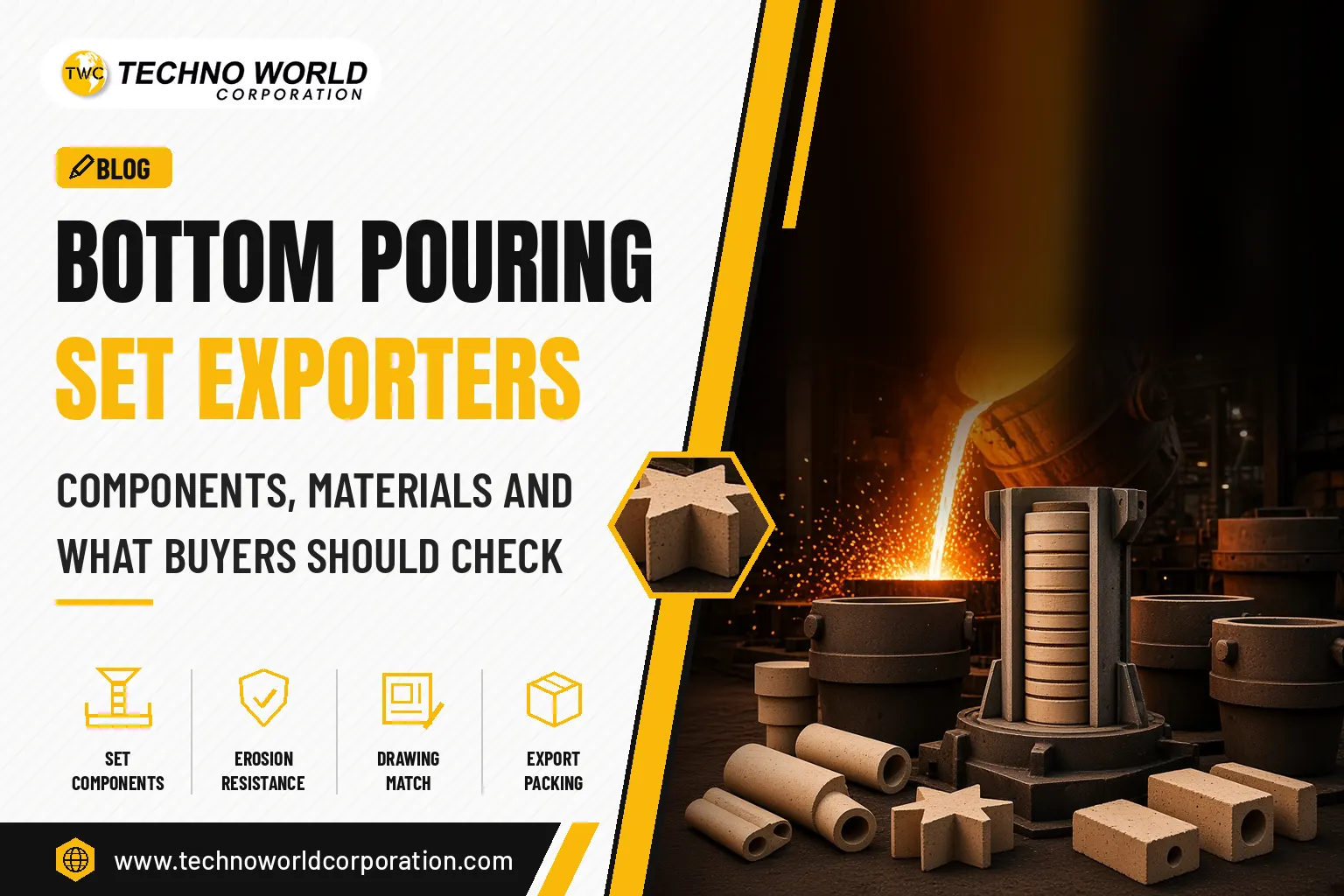
Bottom Pouring Set Exporters: Components, Materials and What Buyers Should Check
Published by Techno World Corporation on 28 October 2026
Steel ingots for forging, rolling and special-steel applications are often cast by bottom pouring, also called uphill teeming. Instead of pouring steel into the top of each mould, molten metal travels down a central trumpet, through refractory runner channels and rises into several moulds from below. The refractory set that makes this possible is known as a bottom pouring set, or B.P. set.
For steel plants and forging units importing these sets, the quality of each refractory piece directly affects ingot cleanliness and yield. This guide explains the components, materials and checks to discuss with bottom pouring set exporters.
Why Steelmakers Use Bottom Pouring
- Less splashing: steel rises calmly in the mould, reducing surface defects on the ingot.
- Several ingots at once: one pour can fill a group of moulds through the runner network.
- Better surface quality: smoother ingot surfaces mean less conditioning before forging or rolling.
- Controlled filling: the rising metal can be protected with mould powder for a cleaner top surface.
The trade-off is that steel contacts more refractory surface on its way to the mould. If the refractories erode or shed particles, those particles can end up as inclusions in the ingot. That is why set quality matters so much.
Components of a Bottom Pouring Set
| Component | Function |
|---|---|
| Trumpet head or funnel | Receives steel from the ladle nozzle |
| Centre runner sleeves | Stacked tubes that carry steel down the vertical trumpet |
| Centre or star brick | Distributes steel from the trumpet into several runners |
| Runner bricks | Horizontal channels set into the base plate, leading to each mould |
| End or tail bricks | Turn the flow upward into the bottom of each mould |
Sets are made to suit the plant's base plate layout, number of moulds and ingot size, so buyers usually order to their own drawings.
Materials and Properties
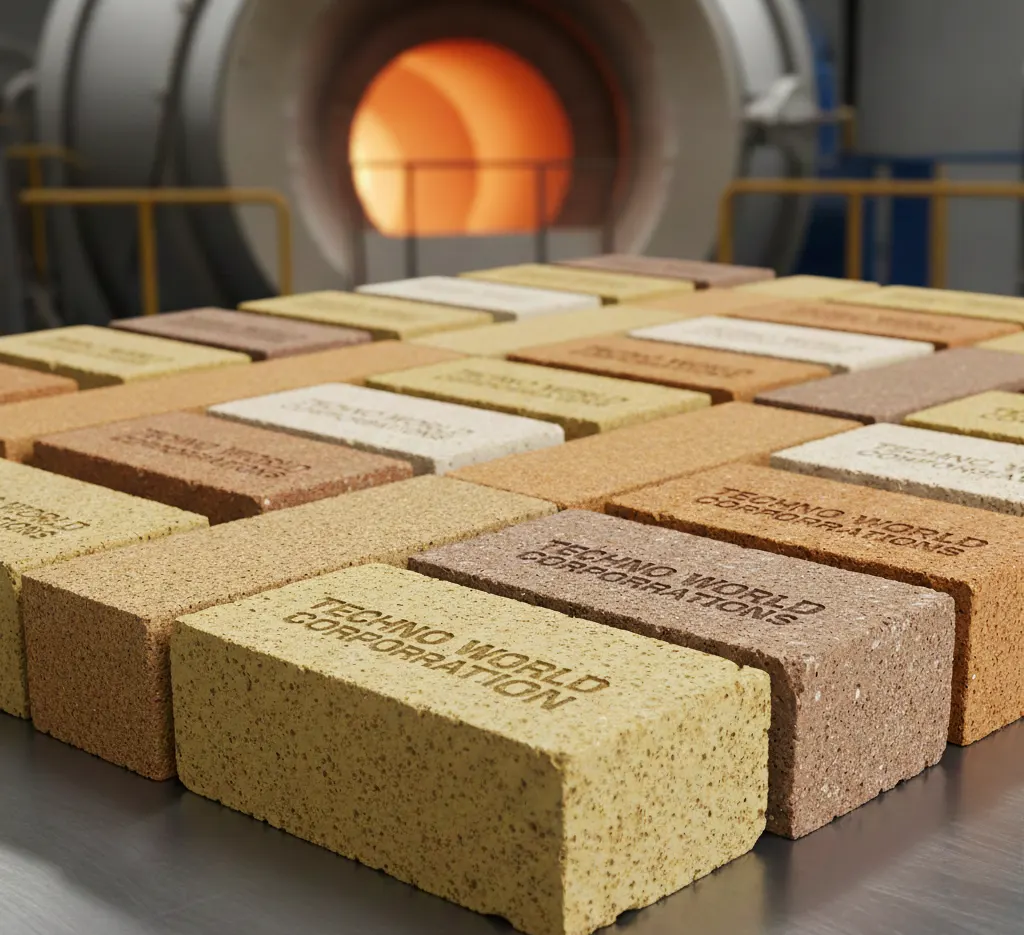
Bottom pouring refractories are typically made from fireclay or high alumina compositions, with formulations chosen to suit the steel grade and casting conditions. Key properties include:
- Erosion resistance so the channels keep their shape during teeming
- Thermal shock resistance to survive the sudden contact with molten steel
- Dimensional accuracy so pieces fit tightly without metal leaking through joints
- Smooth bore for even flow and less turbulence
- Low porosity to limit steel penetration
Techno World Corporation's sets are made from alumina, silica, magnesite or graphite-based raw materials depending on the requirement. Read about high alumina bricks in high-temperature environments.
Assembly and Use Tips
- Store sets in a dry place; moisture can cause cracking or steam-related defects.
- Check every piece for cracks or chips before assembly.
- Seal joints with a suitable refractory mortar. See our mortars and binders.
- Ensure runner bricks sit level and aligned in the base plate.
- Dry or preheat the assembly as specified before teeming.
What to Check With Bottom Pouring Set Exporters
- Drawing match: confirm dimensions, bore sizes and joint profiles against your drawings.
- Material data: chemical composition, bulk density, apparent porosity and cold crushing strength.
- Sample or trial lot: test a small batch on your casting floor before a large order.
- Set completeness: each set should be packed with all components, plus agreed spares.
- Export packing: pieces protected against breakage, palletised or crated, and clearly marked by set.
- Documents: commercial invoice, packing list, certificate of origin and test certificates where required.
Related Products for the Casting Floor
Ingot casting relies on more than the B.P. set. Plants also use ladle bricks, nozzle blocks, slide gate refractories and nozzle filling compound. Foundries can also benefit from ceramic foam filters for cleaner castings.
About Techno World Corporation
Techno World Corporation, based in Rajkot, Gujarat, manufactures, supplies and exports refractory and insulating materials. The company holds ISO 9001:2015, ISO 14001:2015 and CE certifications and serves buyers in India and abroad, including the UK, Australia, Canada, Spain, Malaysia, Germany and New Zealand. See our quality approach and global presence.
Related Reading
Request Bottom Pouring Sets
Contact Techno World Corporation, call +91 77779 78989 or +91 87587 20335, or email info@technoworldcorporation.com. You can also download our refractory brochure.
Popular Posts

Looking for a Reliable Refractory Supplier?
Tell us your application and we will recommend the right material and share specifications and pricing.
Request a Quote